Best Before and Use By Dates: Rules for Food Labels
Shelf life is more than a date on a package. You need to choose the right type of date marking (best before or use by), specify storage conditions, record the shelf life after opening and apply all of this consistently in your product specification, on your label and towards your customers.
Best Before and Use By: What Is the Difference?
EU Regulation 1169/2011 defines two types of date markings. The difference is fundamental and determines what may happen to the product after the date has passed.
What Is a Best Before Date?
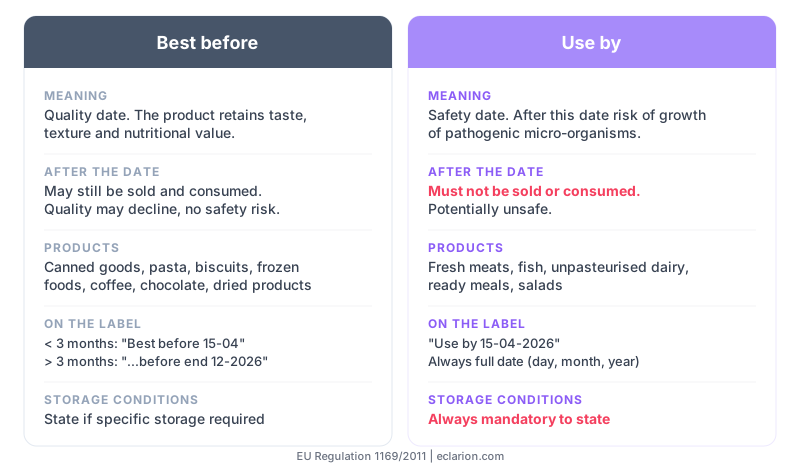
The best before date indicates until when the product retains its optimal quality when stored correctly: taste, texture, nutritional value and appearance. After the best before date, the product is not necessarily unsafe, but the quality may decline.
Best before dates are used for products that do not pose an immediate food safety risk after the date. Examples: dried pasta, biscuits, canned food, frozen products, coffee and olive oil.
The wording on the label:
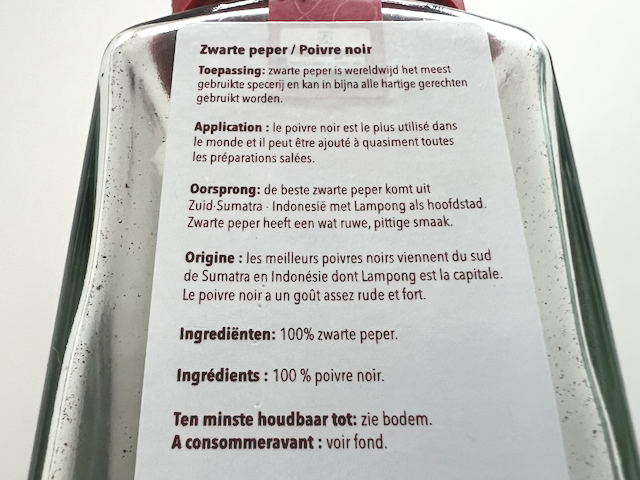
- "Best before" for products with a shelf life shorter than 3 months - at minimum day and month, year is optional
- "Best before end" for products with a shelf life of 3 to 18 months - month and year
- "Best before end" for products with a shelf life longer than 18 months - year only is sufficient
The exact date formats are specified in Annex X of EU Regulation 1169/2011.
After the best before date, the product may still be sold, provided the seller can demonstrate that it is safe. This is the legal basis for food waste reduction initiatives that offer products past their best before date.
What Is a Use By Date?
The use by date is a food safety date. After this date, the product must not be sold or consumed, because there is a real risk of growth of pathogenic micro-organisms.
Use by dates are used for microbiologically perishable products. Examples: fresh deli meats, smoked fish, fresh salads, unpasteurised dairy and ready meals that require refrigerated storage.
The wording on the label:
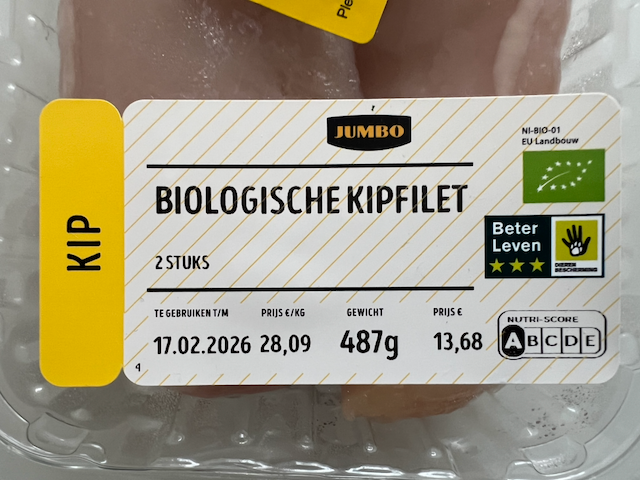
- "Use by [date]" always with the full date (day, month and year)
- Storage conditions must always be stated alongside the use by date
The difference is crucial: after a best before date, a product may still be perfectly fine. After a use by date, it is potentially unsafe. The choice between best before and use by is therefore not a free choice. The type of product and its microbiological risk profile determine which type is required.
When Is Each Date Marking Required?
The rule of thumb: if the product is microbiologically perishable and could pose a health risk within a short period, a use by date is required. In all other cases, a best before date is sufficient.
| Product type | Date marking | Reason |
|---|---|---|
| Fresh deli meats, fish | Use by | Risk of Listeria, Salmonella |
| Ready meals (chilled) | Use by | Risk of pathogen growth |
| Fresh dairy (unpasteurised) | Use by | Risk of Listeria |
| Pre-packed salads | Use by | Limited shelf life, moist environment |
| Canned goods, dry products | Best before | Microbiologically stable |
| Frozen products | Best before | Frozen = stabilised |
| Dried products | Best before | Low water activity |
| Confectionery, chocolate | Best before | Quality loss, no safety risk |
Products exempt from a date marking: fresh fruit and vegetables (unprocessed), wine, vinegar, cooking salt, solid sugar, chewing gum and individual portions of ice cream.
How Do You Determine Shelf Life?
Determining shelf life combines microbiological knowledge, product expertise and validation. There are three common methods.
Shelf Life Studies
The most reliable method. The product is stored under the prescribed conditions and assessed at regular intervals for microbiological and sensory quality. This provides a scientifically validated shelf life.
Shelf life studies are particularly relevant for:
- New products without reference data
- Products with a changed composition or packaging
- Products where shelf life is critical (use by products)
Challenge Tests
In a challenge test, the product is intentionally inoculated with relevant pathogens (such as Listeria monocytogenes) to determine whether and how quickly they grow under the intended storage conditions. This is specifically relevant for ready meals and other use by products.
Comparison with Similar Products
For products that are comparable to existing products (same product category, similar composition, pH and water activity), shelf life can be derived from available reference data. This is the most pragmatic method for manufacturers with a broad product range.
In practice, most manufacturers use a combination: shelf life studies for critical products and reference data for variants and line extensions.
Storage Conditions on the Label
The shelf life date is only valid under the correct storage conditions. That is why it is mandatory to state the storage conditions on the label when the product requires specific storage.
Examples of storage conditions:
- "Keep refrigerated at 2-7°C": for chilled products
- "Store at max. -18°C": for frozen products
- "Store in a cool, dry place": for dry products that are sensitive to moisture
- "Once opened, keep refrigerated at 2-7°C and consume within 3 days": for products with limited shelf life after opening
- "Do not refreeze after thawing": for frozen products
Note: the storage conditions apply to the unopened product. Once the packaging is opened, the conditions change and so does the shelf life. The instructions for after opening are therefore just as important as the storage conditions for the sealed product.
Shelf Life in the Product Specification
In your product specification you record shelf life information in more detail than on the label. Typical parameters:
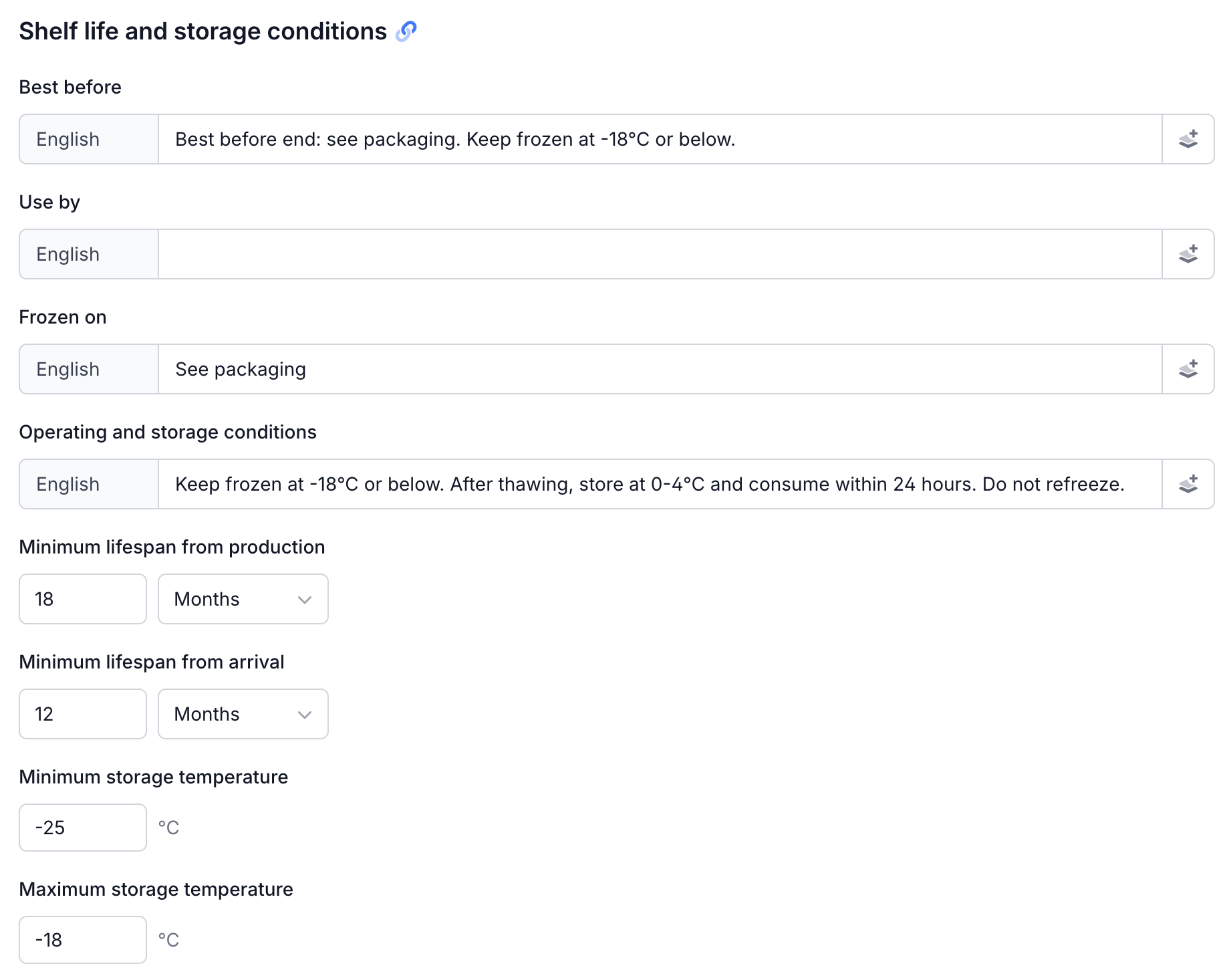
- Minimum shelf life from production: the full shelf life in days, weeks or months
- Minimum shelf life on arrival: the remaining shelf life you guarantee upon delivery to the customer (often an agreement in the terms of delivery)
- Shelf life after thawing: relevant for frozen products sold after thawing
- Minimum and maximum storage temperature: the exact temperature range
- Storage instructions after opening: shelf life and temperature after opening the packaging
In Eclarion you record these parameters per product. The shelf life information forms part of your specification dossier and is included in the specification sheets you generate for customers. When the shelf life changes (for example after a new shelf life study), you update it in one place and it flows through to all derived documents.
Shelf Life and HACCP
Shelf life is directly related to your HACCP system. The shelf life date is the result of your hazard analysis: which microbiological hazards are relevant, at what temperature and over what period can pathogens grow to an unacceptable level?
The connection works both ways:
- From HACCP to shelf life: the microbiological limits and storage conditions from your HACCP plan determine the shelf life
- From shelf life to HACCP: if you change (extend) the shelf life, you must validate that microbiological safety is maintained throughout the full shelf life
Specific parameters that are interlinked: aerobic plate count, Enterobacteriaceae, yeasts and moulds as indicators, and pathogens such as Listeria monocytogenes and Salmonella. Physical-chemical parameters such as pH value and water activity are also directly related to shelf life, as they determine whether micro-organisms can grow.
Common Mistakes with Shelf Life Information
Best Before and Use By Mixed Up
Incorrectly applying a best before date where a use by date is required (or vice versa) is a serious violation. A perishable product with a best before date instead of a use by date can still be sold after the date, while that poses a health risk.
Storage Conditions Not Stated
The shelf life date is only valid under the correct storage conditions. If the storage conditions are missing from the label, the date is meaningless. This is a common shortcoming found during Food Standards Agency inspections.
Shelf Life After Opening Missing
Many products have a significantly shorter shelf life after opening. If this is not stated on the label, consumers may keep the product too long after opening, leading to health risks.
Insufficient Margin for the Supply Chain
The shelf life from production is not the same as the shelf life for the consumer. The product needs to be transported, stored at the distributor and sit on the retailer's shelf before the consumer buys it. If the shelf life at production is tight, too little margin remains for the consumer.
Shelf Life Not Revalidated After Recipe Change
A change in composition can affect shelf life. A change in pH, salt content, water activity or the use of preservatives can alter microbiological stability. After a significant recipe change, the shelf life must be revalidated.
Frequently Asked Questions About Shelf Life
What Is a Best Before Date?
A best before date is a quality date: after the best before date, the product is not necessarily unsafe, but the quality (taste, texture, nutritional value) may decline. The producer guarantees optimal quality until this date. After the best before date, the product may still be sold.
What Is a Use By Date?
A use by date is a safety date: after the use by date, the product must not be sold or consumed. Use by dates are used for microbiologically perishable products where a real health risk exists after the date.
Can You Sell Products After the Best Before Date?
Yes. After the best before date, a product may still be sold, provided the seller can assess that the product is safe and of acceptable quality. The responsibility then shifts to the seller. After the use by date, a product must not be sold.
How Do I Determine Whether My Product Needs a Best Before or Use By Date?
The criterion is microbiological perishability (Article 24, paragraph 1, EU Regulation 1169/2011). If the product could pose a health risk within a short period due to growth of pathogenic micro-organisms under the prescribed storage conditions, a use by date is required. When in doubt, consult the guidelines from the Food Standards Agency or have a microbiological risk assessment carried out.
Do I Need to Include a Date Marking on Frozen Products?
Yes. Frozen products receive a best before date. Although freezing stops microbiological growth, quality loss still occurs due to ice crystal formation and oxidation, among other things. Note: for frozen meat, meat preparations and unprocessed fishery products, the date of freezing must also appear on the label (Article 24, paragraph 2). For other frozen products this is not required.
How Do I Handle Shelf Life When Exporting to Other Countries?
The EU rules for date markings apply in all EU member states. When exporting outside the EU, different rules may apply. Always check the labelling requirements of the destination country. Storage conditions must also be realistic for the entire chain, including transport.
Can I Extend the Shelf Life of My Product?
Yes, through adjustments to the recipe (pH reduction, preservatives, salt content), the packaging (MAP/modified atmosphere packaging, vacuum packaging) or the production process (pasteurisation, sterilisation). Every extension must be validated with a shelf life study or challenge test.
Where Do I Record Shelf Life Information as a Manufacturer?
In your product specification. There you document the minimum shelf life from production, the remaining shelf life on delivery, storage temperatures and instructions after opening. This information is then used for the label and for communication with customers. With software like Eclarion you manage this centrally and automatically include it in your specification sheets.
More than a date on the label
Shelf life is not a standalone date on a label. It is the result of your product composition, your storage conditions, your microbiological risk analysis and your supply chain agreements. The information must be consistent in your HACCP plan, your product specification and on your label.
With Eclarion you record shelf life information per product as an integral part of your specification dossier. Storage temperatures, shelf life periods, instructions after opening and after thawing: everything in one place, automatically included in your specification sheets. Start with a free trial and get your product documentation in order.