Calculating Sulphite Content and the 10 ppm Threshold
Sulphites (SO₂) must appear on the label when the final product contains more than 10 mg/kg. Eclarion automatically calculates total sulphite content from the bill of materials and instantly shows whether you are above or below that threshold. More about sulphites as an allergen and hidden sources?
Entering Sulphite Concentration per Ingredient
Open an ingredient from the bill of materials and go to the Allergens tab. Under Sulphite you will find two concentration input fields (mg/kg):
- Raw material contamination - the sulphite content stated by the supplier (e.g. 50 mg/kg SO₂ in dried fruit)
- Production process contamination - sulphite originating from the production line (e.g. residue from a previous batch of potato salad, as potato flakes often contain sulphite as an antioxidant)
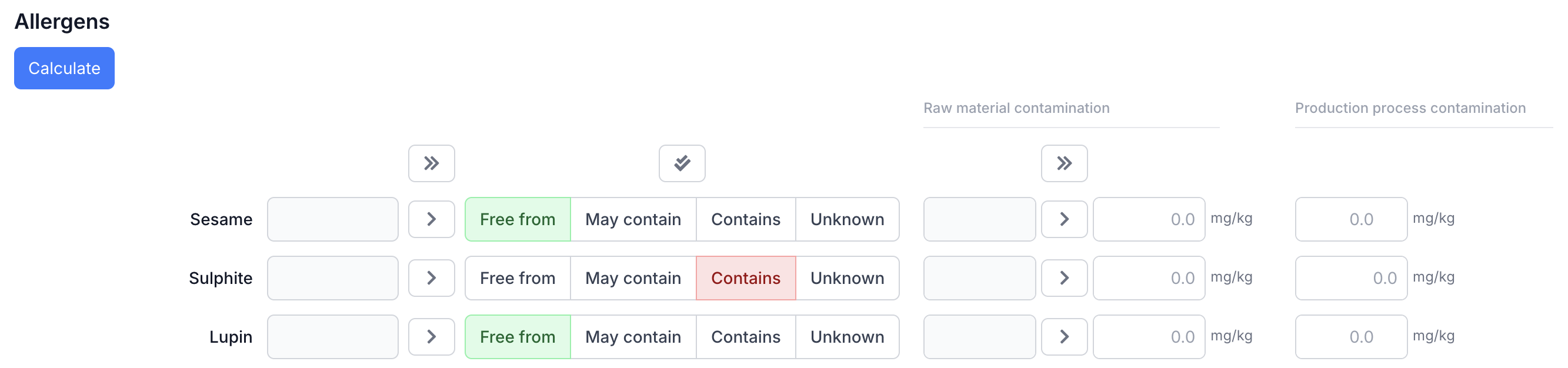 Enter the value in mg/kg. Eclarion automatically adds both sources together.
Tip: ask suppliers explicitly about sulphite content. Sulphites are not always listed on supplier specifications, especially for potato products, shellfish and concentrates.
Total Calculation from the Bill of Materials
When you click Calculate on the end product's allergen tab, Eclarion calculates the weighted sum of all sulphite contributions from the bill of materials. Each ingredient contributes proportionally to its percentage in the recipe.
Example: a honey mustard dressing contains 15% mustard (150 mg/kg SO₂), 10% wine vinegar (80 mg/kg SO₂) and 5% lemon juice concentrate (20 mg/kg SO₂). The contribution to the end product is:
- Mustard: 150 x 0.15 = 22.5 mg/kg
- Wine vinegar: 80 x 0.10 = 8.0 mg/kg
- Lemon juice: 20 x 0.05 = 1.0 mg/kg
- Total: 31.5 mg/kg
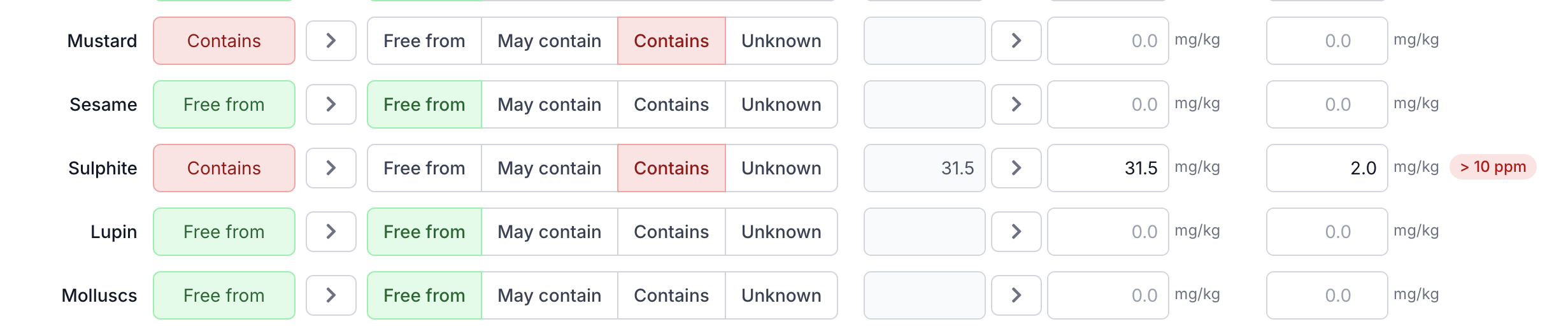 The calculated total appears in the grey column on the sulphite row. With 2.0 mg/kg process contamination added, the grand total is 33.5 mg/kg, well above the threshold.
Monitoring the Declaration Threshold
Next to the sulphite input field a badge appears indicating whether the total sulphite content exceeds the legal threshold:
- < 10 ppm (green) - sulphite content is below the threshold, declaration is not required
- > 10 ppm (red) - sulphite content exceeds the threshold, sulphites must appear on the label
 The badge is based on the total of ingredient and process contamination combined. Hover over the badge to see the exact total in mg/kg.
The badge updates automatically when you change a value and the form saves.
Tip: the 10 mg/kg threshold applies to the end product. Individual ingredients may have higher values. What matters is the weighted sum in the final product.
What Is the Difference with PAL?
The sulphite calculation is separate from the PAL assessment. PAL assesses whether a "may contain" warning is needed based on cross-contamination risk (Hazard Quotient). The sulphite threshold determines whether sulphites must appear as an allergen in the ingredient declaration.
In practice:
| Sulphite threshold | PAL assessment | |
|---|---|---|
| Question | Must sulphites appear on the label? | Is "may contain" needed? |
| Limit | 10 mg/kg (fixed) | Hazard Quotient > 1 (variable per allergen) |
| Result | Declaration in ingredient list | Precautionary labelling |
| Applies to | Sulphites only | All PAL allergens (milk, peanut, gluten, etc.) |
Sulphites therefore do not appear in the PAL results at the bottom of the allergen tab. The badge next to the input field is the only indicator you need.
Frequently Asked Questions
Do I need to enter process contamination separately for sulphites?
Only if your production line previously processed products containing sulphites. Think beyond wine and mustard — potato products (flakes, puree) and dried fruit often contain sulphite too. The process field is for SO₂ residue from the production line. Sulphite that enters via ingredients should be entered on the ingredient itself.
Why is there no particulate field for sulphites?
Sulphites are a dissolved substance, not a particle. Particulate contamination (mg/particle) is only relevant for particle-based allergens such as sesame seeds or nut fragments.
How do I know which ingredients contain sulphites?
Check the supplier specification for E-numbers E220 through E228. Pay particular attention to potato products, shellfish, dried fruit, wine vinegar and concentrates. Read more about hidden sources in Sulphites in Food: the Overlooked Allergen.